AI and the Evolution of Drone Swarms: The Sky's the Limit
AI is about to transform the way UAVs (aka, drones) are used in various industries and the government.
Brian C. Newman
12/18/20232 min read
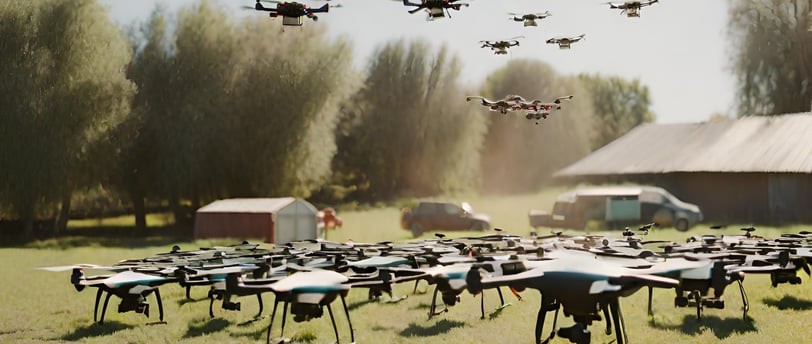
The fusion of Artificial Intelligence (AI) with unmanned aerial vehicles (UAVs), or drones, has given rise to a technological marvel: drone swarms. As someone knowledgeable in both AI and drones, I'm excited to delve into how AI is revolutionizing the capabilities of drone swarms and the vast array of tasks they can undertake.
The Concept of Drone Swarms
Drone swarms are groups of drones operating together under a unified control system, often powered by AI. This approach allows drones to communicate and coordinate their actions, akin to a flock of birds or a school of fish, creating a more versatile and robust system than individual drones.
Enhanced Efficiency and Coordination
AI algorithms enable drones in a swarm to make real-time decisions, adjust formations, and adapt to changing environments. This coordination is crucial in tasks like aerial mapping, where consistent coverage and precision are critical.
Search and Rescue Operations
In search and rescue missions, drone swarms can cover vast areas quickly, using AI to analyze terrain and identify signs of survivors. This rapid response can be life-saving in natural disasters or accidents in remote locations.
Agricultural Monitoring and Management
Drone swarms are revolutionizing agriculture by providing farmers with detailed insights into crop health, soil conditions, and pest infestations. AI-driven aerial data analysis helps make informed decisions, leading to higher yields and more sustainable practices.
Environmental Monitoring
From tracking wildlife populations to monitoring environmental changes like deforestation or melting glaciers, drone swarms offer an efficient and less intrusive way of gathering vital ecological data.
Military and Defense Applications
In the military sphere, drone swarms represent a significant shift in tactics and strategy. These swarms can perform surveillance, electronic warfare, and even targeted strikes with greater efficiency and reduced risk to personnel.
The Challenges Ahead
While the potential of AI-powered drone swarms is immense, it also raises safety, privacy, and regulation challenges. Ensuring responsible use and addressing ethical concerns are crucial as this technology advances.
Conclusion
The evolution of AI-powered drone swarms is a testament to the incredible strides we're making in technology. From enhancing agricultural practices to revolutionizing search and rescue operations, the potential applications are as vast as the skies they navigate. As we continue to explore these possibilities, we must also navigate the accompanying challenges with caution and responsibility.